Tag: Yemen

  • U.S. Federal Court Halts Trump Administration Decision to Terminate Temporary Protected Status (TPS) for Yemeni Nationals

    U.S. Federal Court Halts Trump Administration Decision to Terminate Temporary Protected Status (TPS) for Yemeni Nationals

    A U.S. federal court issued an emergency order today mandating the immediate suspension of the Trump administration’s decision to terminate Temporary Protected Status (TPS) for Yemeni nationals. This ruling ensures that TPS will remain in effect pending a final judgment in the lawsuit, which alleges clear violations of the Administrative Procedure Act and the constitutional protections guaranteed under the Fifth Amendment.

    In its decision, the court stated: “Yemeni TPS holders are not ‘criminals,’ ‘burdens,’ or ‘seekers of unearned benefits.’ They are law-abiding individuals who were granted the right to remain in the United States because the government has repeatedly determined, under the TPS statute, that Yemen is experiencing an ongoing armed conflict, and that forcing their return under such conditions would pose a serious threat to their safety.”

    This ruling protects thousands of Yemeni nationals from the risk of forced deportation to a country facing one of the world’s most severe humanitarian crises. Official records continue to demonstrate the persistence of extraordinary conditions rendering Yemen unsafe, directly contradicting the rationale behind the termination decision, which lacked a basis in current and objective realities.

    In this context, “Ahmed,” a Yemeni engineer covered under the program and a father of six, two of whom are U.S. citizens, stated that he had felt secure with his children until the administration’s decision threatened to uproot them and return them to a war-torn country. He described the court’s intervention as a restoration of the sense of safety that had been taken from them. Such testimonies underscore the profound existential anxiety experienced by thousands of families whose members actively contribute to American society as doctors, engineers, and workers, and whose continued presence reflects resilience and strengthens the broader social fabric.

    For his part, attorney Abdulrahman Barman, Executive Director of the American Center for Justice, expressed his appreciation to the organizations involved in the case. He affirmed the Center’s commitment to pursuing the legal process through all necessary stages, in line with its professional responsibility to uphold the values of the United States and protect vulnerable populations from arbitrary decisions. Barman emphasized that humanitarian protections must not be repurposed as mechanisms for deportation, but rather must remain safeguards grounded in factual realities and conditions on the ground, free from political motivations that seek to strip migrants of their legally guaranteed protections.
  • Sixteen Years in Iraqi Prisons: Hasna Ali’s Case Prompts Urgent Calls to Secure the Release of 11 Yemeni Detainees

    Sixteen Years in Iraqi Prisons: Hasna Ali’s Case Prompts Urgent Calls to Secure the Release of 11 Yemeni Detainees

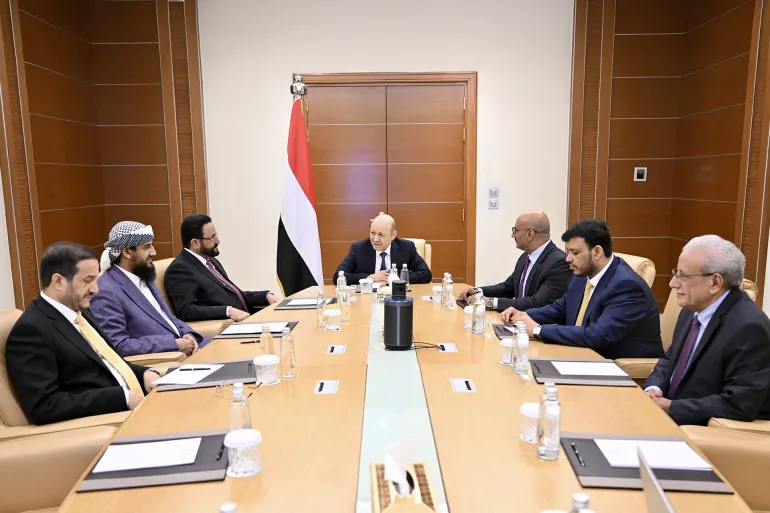
    The American Center for Justice (ACJ) has issued an urgent appeal to the Chairman of Yemen’s Presidential Leadership Council, Dr. Rashad Al-Alimi, calling for immediate intervention to end the prolonged detention of eleven Yemeni nationals held in Iraqi prisons.

    In its statement, the Center highlighted the case of Yemeni detainee Hasna Ali, who is in her sixteenth year of detention. She has received cumulative prison sentences amounting to up to 32 years and is currently suffering from serious health conditions, including a perforation in the diaphragm and a gastric ulcer. She has also been deprived of contact with her children for many years.

    According to ACJ, many of the detainees are serving harsh sentences linked to broader political circumstances, reportedly without clear evidence of involvement in criminal or terrorist activities. The Center emphasized that this situation places a moral and legal responsibility on the Yemeni government to act to protect their rights and facilitate their return.

    The Center further noted that there is a viable opportunity to secure the transfer of Yemeni detainees from Iraqi prisons, pointing to similar agreements concluded by Baghdad with other countries. It urged the Chairman of the Presidential Leadership Council to take decisive sovereign action by directing relevant authorities to expedite the necessary legal and technical arrangements.

    Abdulrahman Barman, Executive Director of ACJ, stated that resolving this issue requires moving beyond ineffective administrative approaches that have failed in the past. He stressed that the case should be treated as a priority human rights matter at the core of the Council’s responsibilities, particularly given the deteriorating health conditions of several detainees, some of which have reached critical levels requiring immediate intervention. He also commended the constructive role played by the Yemeni embassy in efforts to address the issue.

    Hasna Ali is considered among the longest-serving female detainees in Iraq. She was arrested in 2010 and sentenced to imprisonment in connection with her marriage to Abu Ayyub al-Masri, a senior Al-Qaeda figure. She had married him in Yemen when he was working as a teacher in her village in Amran Governorate under an assumed identity. He later moved to the United Arab Emirates, where he served as an imam in a major mosque, before relocating to Iraq, where he became involved in leading the group’s activities against U.S. forces. He was killed in 2010.

  • Statement condemning the assassination of Dr. Abdulrahman Al-Shaer

    Statement condemning the assassination of Dr. Abdulrahman Al-Shaer

    The American Center for Justice (ACJ) strongly condemns the assassination of educational expert Dr. Abdulrahman Al-Shaer, carried out by unidentified armed assailants. This direct attack on a prominent academic figure constitutes a deliberate blow to the civilian fabric and reflects a grave deterioration in the security environment, while placing national professionals who contribute to societal development at serious risk.

    The Center affirms that the resurgence of targeted killings is intrinsically linked to the absence of accountability and the leniency of law enforcement institutions in addressing previous crimes. A climate of impunity emboldens criminal networks to expand their operations and provides them with a permissive environment to continue targeting intellectuals and influential figures. The lack of effective legal deterrence accelerates the cycle of violence and undermines what remains of social stability.

    The Center holds the Ministry of Interior and relevant security agencies fully responsible for safeguarding citizens and protecting their right to life. It underscores the urgent need to move beyond superficial measures and adopt concrete, effective actions to protect society from organized criminal violence.

    Accordingly, the American Center for Justice calls for the following:
    •⁠ ⁠Immediate action by the Ministry of Interior to pursue the perpetrators, apprehend them, and refer them to a competent, independent, and impartial judiciary.
    •⁠ ⁠The launch of a transparent and comprehensive investigation to uncover the motives, as well as the parties responsible for planning and financing the crime, and the prompt public disclosure of the findings.
    •⁠ ⁠The implementation of robust preventive security measures to protect civilians and public figures from potential targeting.
    •⁠ ⁠An end to the prevailing climate of impunity through the effective functioning of justice institutions and the strict enforcement of the law to prevent the recurrence of such crimes.

    American Center for Justice (ACJ)
    26 April 2026

  • a Letter to the Office of the United Nations High Commissioner for Refugees (UNHCR)

    a Letter to the Office of the United Nations High Commissioner for Refugees (UNHCR)

    American Center for Justice Warns Against the Forced Deportation of a Yemeni and a Moroccan in Benin

    The American Center for Justice (ACJ) has submitted an urgent communication to the Office of the United Nations High Commissioner for Refugees (UNHCR) concerning the detention by authorities in the Republic of Benin of a Yemeni national and a Moroccan national. In its letter dated March 26, 2026, the Center highlighted the case of the Yemeni national, Ahmed Al-Maliki, who faces serious risks to his life and personal safety if returned to his country of origin, which continues to experience ongoing armed conflict and severe humanitarian conditions.

    The Center stressed that any attempt to forcibly return him would constitute a violation of the principle of non-refoulement, a cornerstone of international refugee law.

    ACJ urged UNHCR to intervene immediately to assess the protection needs of the individuals concerned and to prevent any unlawful deportation measures.

    The Center also raised serious concerns regarding the referral of the two individuals, Ahmed Al-Maliki and Abdelkamel El-Hmamouchi, to the Court for the Repression of Economic Offences and Terrorism (CRIET) in Cotonou, Benin. The Michigan-based organization indicated that it had received credible information suggesting that the individuals had been subjected to arbitrary detention and violations of fair trial guarantees, as well as the potential misuse of legal frameworks in their cases.

    It further urged UNHCR to monitor the ongoing judicial proceedings before this specialized court, ensure that legal frameworks are not misused against the detainees, and document any human rights violations associated with the case.

    In an urgent appeal, the American Center for Justice called for consideration of resettlement in a safe third country, given the impossibility of safe return to their countries of origin under current conditions, particularly in light of the worsening humanitarian crisis in Yemen. The Center expressed its full readiness to cooperate with UNHCR to ensure the safety of the detainees, emphasizing that the current situation may constitute serious violations of international human rights and refugee protection standards, and requires urgent action to prevent irreparable harm

  • Press Release: Sniping of Children in Taiz .. Systematic Houthi Exploitation of Civilian Vulnerability

    Press Release: Sniping of Children in Taiz .. Systematic Houthi Exploitation of Civilian Vulnerability

    The American Center for Justice (ACJ) unequivocally condemns the ongoing sniper attacks targeting civilians in the city of Taiz. The latest victim, 14-year-old Ibrahim Jalal Amin, was fatally shot by a Houthi-affiliated sniper positioned in the Al-Mawshaki area while returning home from school on April 5. This incident reflects a recurring pattern of conduct that deliberately targets individuals least able to protect themselves or respond to hostile fire.

    The deployment of precision sniper weapons equipped with advanced optics provides the perpetrator with clear visual identification of the victim, thereby eliminating any plausible claim of accidental or indiscriminate harm. The targeting of children and women in densely populated civilian areas constitutes a deliberate and calculated military practice aimed at crippling community life and engineering demographic displacement. By turning school routes and water collection points into zones of lethal risk, these actions impose gradual forced displacement, effectively transforming residential neighborhoods into depopulated buffer zones that facilitate military domination.

    Within this framework, the systematic targeting of economically and socially vulnerable populations represents a deliberate strategy to consolidate front lines at minimal operational cost. By focusing on families compelled by necessity to remain in high-risk areas and unable to afford displacement, perpetrators achieve localized deterrence while avoiding retaliatory dynamics that might arise from targeting members of armed groups or influential tribal networks. Consequently, these vulnerable populations are left exposed to sustained sniper threats, their daily existence reduced to a continuous mechanism of coercion, and their communities transformed into environments governed by entrenched fear.

    These field-based violations are compounded by a media discourse that deliberately obscures accountability by promoting misleading narratives about the political beneficiaries of condemning such crimes. This tactic seeks to detach the criminal act from its material reality, disregarding the fact that the gunfire originates from positions under the group’s control following deliberate identification of the victim. By shifting the discourse from the physical crime scene to speculative political interpretation, this narrative performs a dual function: concealing the direct perpetrator and fostering a climate of legal paralysis that enables ongoing violations and facilitates impunity.

    In light of these grave and ongoing abuses, the American Center for Justice stresses that routine international condemnations have failed to deter this pattern of violence and have contributed to the instrumentalization of vulnerable civilians as bargaining tools. ACJ therefore calls on the international community and the UN Special Envoy to adopt concrete and enforceable measures to halt this human attrition. These include lifting the siege on Taiz, ensuring the withdrawal of military positions overlooking civilian neighborhoods, and activating international accountability mechanisms through rigorous criminal documentation that links each violation to its direct perpetrator as well as the chain of command responsible for authorizing and sustaining such acts. These steps are essential to breaking the cycle of impunity and ensuring effective protection for civilian lives.

  • Press Release: Landmines in Yemen — A Sustainable Infrastructure of Violence and a Crime That Cannot Be Justified by Military Necessity

    Press Release: Landmines in Yemen — A Sustainable Infrastructure of Violence and a Crime That Cannot Be Justified by Military Necessity

    On the International Day for Mine Awareness, observed today, Saturday, April 4, the American Center for Justice (ACJ) affirms that landmine networks in Yemen constitute a parallel infrastructure of violence, continuing to claim lives and destroy livelihoods independently of the immediate military context that produced them.

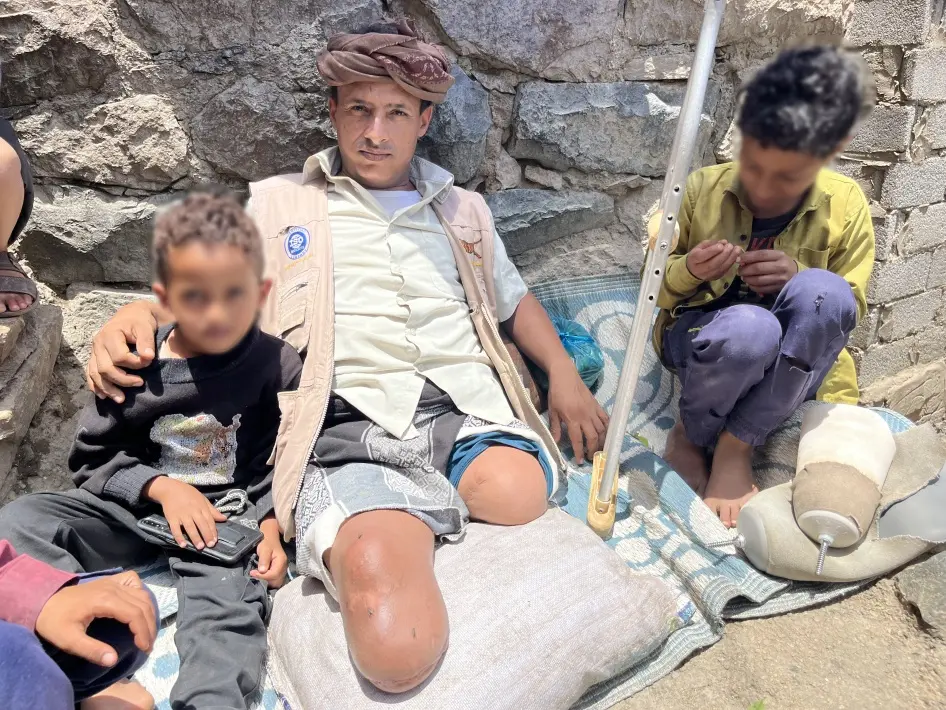
    The Center recalls its human rights report, “Mines.. Blind Killer,” which documented the systematic and indiscriminate planting of lethal devices across Yemeni territory. It notes that estimates based on field monitoring indicate more than fifteen thousand civilian victims, nearly 80 percent of whom suffer permanent disabilities and lifelong physical deformities as a result of the deliberate use of fragmentation devices and camouflaged explosives specifically designed to mimic the natural environment.

    The Center further affirms that the Houthi militia bears full and exclusive responsibility for the planting of anti-personnel and anti-vehicle mines, as well as improvised and disguised explosive devices, in the current conflict. It emphasizes that the group’s failure, as a de facto actor, to accede to international treaties does not absolve it of criminal responsibility. Customary international humanitarian law imposes binding obligations prohibiting the use of indiscriminate weapons and the targeting of civilians, and places responsible leadership under potential prosecution under the principle of universal jurisdiction.

    The Center underscores that landmines bear no legitimate relation to the principle of military necessity; rather, they operate as inherently indiscriminate and automated means of harm that kill civilians arbitrarily, without any threat posed by the victims. The brutality of this practice was starkly evident during the truce in mid-2022, when the cessation of hostilities prompted thousands of displaced persons to return to their villages and farms, only to encounter minefields laid by the Houthi militia prior to withdrawal. This resulted in severe human and material losses that undermined prospects for restoring normal life.

    The Center also draws attention to an additional catastrophe resulting from the continued closure of main roads, particularly the Sana’a–Marib route, which forces travelers to take an alternative desert route through Al-Jawf Governorate. The danger along this compulsory route is exacerbated by climate change and flooding, which displace landmines and conceal them beneath shifting sand dunes, creating mobile and unpredictable death traps that expand the scope of the threat.

    Recommendations:

    The American Center for Justice also expresses its deep appreciation for the exceptional efforts undertaken by the Saudi “Masam” Project to clear Yemeni land of landmines, and commends the significant sacrifices made by its field teams in dismantling this deadly infrastructure, protecting civilian lives, and restoring safety.

    The American Center for Justice calls on all relevant parties to fulfill their obligations through the following measures:

    The international community and sponsors of peace processes: Require the handover of minefield maps as a preliminary condition prior to any political or security negotiations, and reject the marginalization of this crime in peace discussions.

    The Houthi militia: Immediately cease the planting of all types of landmines, provide accurate maps of contaminated areas, and assume full criminal and material responsibility for ongoing violations against civilians.

    The Yemeni government: Intensify efforts to provide sustainable medical and psychological care to victims, and integrate amputees into structured, long-term rehabilitation programs that go beyond temporary response measures.

    International human rights organizations: Develop international litigation cases based on the principle of universal jurisdiction to hold accountable the military and political leaders involved in orchestrating this systematic mine-laying campaign.

    American Center for Justice (ACJ)
    April 4, 2026

  • المركز الأمريكي للعدالة يدين احتجاز الوسيط المرادي ويطالب بإنقاذ ملف الأسرى

    المركز الأمريكي للعدالة يدين احتجاز الوسيط المرادي ويطالب بإنقاذ ملف الأسرى

    يعرب المركز الأمريكي للعدالة (ACJ) عن تفاجئه البالغ وإدانته الشديدة لقيام جماعة الحوثي باحتجاز الوسيط المحلي، الشيخ عبداللطيف المرادي، فور وصوله إلى العاصمة صنعاء استجابة لدعوة رسمية من “لجنة الأسرى” التابعة لها.
    إن استدراج وسيط بضمانات رسمية ثم تقييد حريته هو سلوك يضرب جذور الثقة التي تستند إليها أي مفاوضات، ويحيل الوسطاء إلى رهائن وأوراق ضغط تخضع للحسابات الأمنية، ويعيق جهودهم في حل العقد التقنية التي تمنع إنجاز صفقات التبادل، كما يعكس هذا الإجراء توجهاً يقصد تفكيك آليات الوساطة المحلية، ويفرّغ المسار الإنساني من الفاعلين المستقلين.
    يعيد هذا الاحتجاز التذكير بقضية المحامي عبدالمجيد صبرة، ليؤكد تمسك الجماعة بسياسة منهجية تستهدف ترهيب الفاعلين، وتجرف الساحة من المدافعين والوسطاء القادرين على إحداث اختراقات ملموسة في القضايا الإنسانية المعقدة.
    يطالب المركز جماعة الحوثي بالتوقف الفوري عن هذه السياسة التدميرية التي تحتكر مساحات التفاوض وتقطع قنوات التواصل المجتمعية، ويدعو إلى الإفراج العاجل عن المرادي، والسماح لملف الأسرى والمختطفين بالتحرك الإيجابي بعيداً عن تكتيكات الاستحواذ والترهيب.
    ويحذر المركز من أن الإصرار على استهداف القنوات المستقلة يغلق منافذ الحل المتبقية، ويعطل مسار التبادل، ويضاعف أمد المعاناة القاسية التي تتكبدها آلاف العائلات اليمنية.
    المركز الأمريكي للعدالة (ACJ)
    25 مارس 2026

  • بيان إدانة صادر عن المركز الأمريكي للعدالة (ACJ) بشأن القصف الصاروخي الذي شنته جماعة الحوثي على مديرية حيران في محافظة حجة

    بيان إدانة صادر عن المركز الأمريكي للعدالة (ACJ) بشأن القصف الصاروخي الذي شنته جماعة الحوثي على مديرية حيران في محافظة حجة

    بيان إدانة صادر عن المركز الأمريكي للعدالة (ACJ) يدين المركز الأمريكي للعدالة القصف الصاروخي الذي شنته جماعة الحوثي على مديرية حيران في محافظة حجة، يوم الأحد 15 مارس 2026 الموافق 26 رمضان.

    استهدف القصف منزل المواطن عادل الجنيد أثناء تجمع المدنيين لتناول طعام الإفطار، وأسفر عن سقوط عشرات الضحايا من المدنيين العزل. تشير المعلومات والتقارير الأولية إلى أن عدد القتلى تجاوز 15 شخصاً، بينما زاد عدد الجرحى عن 20، مايعني ارتفاع إجمالي الضحايا عن أكثر من 30 مدنيا.

    المعلومات المتوفرة حتى الان تؤكد مقتل ثمانية مدنيين على الأقل، بينهم طفلين هما: مودة أكرم الشاوش (3 سنوات) وعبدالرحمن مصعب الطيب (5 سنوات)، إلى جانب ستة بالغين. كما أصاب القصف مدنيين آخرين، بينهم الطفلة أسماء مصعب الطيب، التي تبلغ من العمر ثلاث سنوات، وطارق عادل جنيد، الذي لم يتجاوز الثانية من العمر.

    يمثل توجيه نيران المدفعية نحو منزل مدني، وفي وقت تتجمع فيه العائلات للإفطار، انتهاكاً جسيماً لمبادئ وأحكام الشريعة الإسلامية، وخرقا لقواعد القانون الدولي الإنساني. تعكس هذه الهجمات استخفافاً ممنهجاً بحياة المدنيين، وتؤكد أن استمرار قصف الأماكن المأهولة بالسكان يجرد النزاع من أي التزامات قانونية أو أخلاقية، ويعمق فداحة الكلفة الإنسانية في اليمن.

    يدعو المركز المجتمع الدولي والآليات الأممية المعنية بحقوق الإنسان إلى التدخل وتوثيق هذه الانتهاكات، والتحرك الجاد لضمان مساءلة مرتكبيها حيث تتطلب حماية المدنيين تدابير عملية توقف هذه الهجمات، وتضع حداً لحالة الإفلات المستمر من العقاب.

    صادر عن المركز الأمريكي للعدالة ACJ 15 مارس 2026

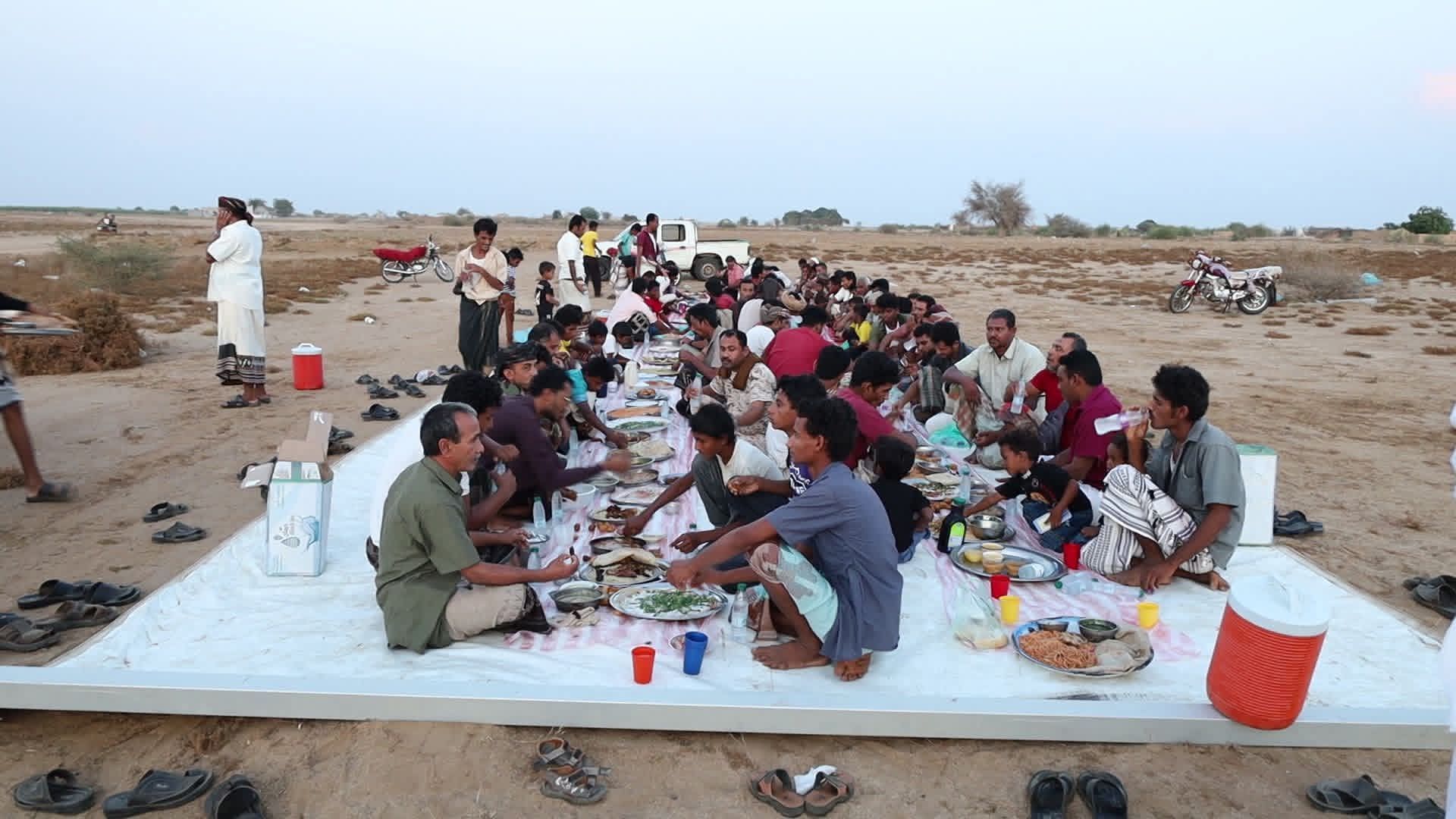
    • الصورة لأبناء القرى في حيران حسب عاداتهم حيث يجتمع سكان القريه في إفطار جماعي.
    الصورة لأبناء القرى في حيران حسب عاداتهم حيث يجتمع سكان القريه في إفطار جماعي.
  • Five special rapporteurs of the Human Rights Council issue a joint memorandum regarding the Houthi arrest of lawyer Abdulmajid Sabra.

    Five special rapporteurs of the Human Rights Council issue a joint memorandum regarding the Houthi arrest of lawyer Abdulmajid Sabra.

    The American Center for Justice welcomes the memorandum issued by five UN Special Rapporteurs and Working Groups of the Human Rights Council and supports its call for direct legal accountability for the Ansar Allah movement, as the de facto authority in Sana’a, regarding the arbitrary arrest and enforced disappearance of lawyer and human rights defender Abdulmajid Sabra.

    The Center notes the gravity of the facts documented by the Special Rapporteurs. On September 25, 2025, Houthi security and intelligence personnel stormed Sabra’s office and arrested him because of a Facebook post in which he criticized the authorities’ restrictions on citizens’ right to commemorate the anniversary of the September 26 Revolution. The Center draws attention to the significance of the UN memorandum’s inclusion of the “cultural courses” mechanism, deeming it a repressive tool employed by security agencies for weeks or months to reshape the ideological convictions of political detainees. This mechanism is often accompanied by solitary confinement to break their will.

    The Center endorses the legal basis adopted in the UN document, which obligates the Houthi movement to implement Common Article 3 of the Geneva Conventions and international human rights law. The Center agrees with the UN experts that the lack of international recognition of the de facto authority does not absolve it of the responsibility to guarantee the rights of individuals under its control. The isolation of lawyer Sabra and the lack of any information about him constitute a violation of peremptory norms of international law prohibiting enforced disappearance.

    The American Center for Justice emphasizes the memorandum’s warning regarding the undermining of the legal protection system. It considers the targeting of a human rights lawyer who has defended victims of enforced disappearance a violation of the UN’s fundamental principles concerning the role of lawyers. This targeting aims to deprive society of its legal defense by intimidating human rights defenders and preventing them from carrying out their duties with immunity and independence.

    The Center joins the demands of UN experts for the immediate disclosure of the whereabouts of lawyer Sabra, clarification of the legal basis for his arrest, and guarantees of his physical safety and right to a fair trial. It also calls for an end to the security agencies’ use of this mechanism to criminalize freedom of expression and monopolize public space.

  • Between her longing and the face of her husband, there is a mine and a slow death

    Between her longing and the face of her husband, there is a mine and a slow death

    By: Bushara Al-Hamidi

    The dream of a young married woman ended in an instant—just when she set out to check on her life partner. Little did she know it would be a sin. But the question of whether it was or wasn’t no longer mattered, and the answer would be of no use now—her soul had already ascended to heaven.

    She was Rabab Qaid, 25 years old, from the village of Al-Saidia in the Al-Khokha district of Al-Hodeidah Governorate. Since 2008, she had been married to Naji Muhammad Suleiman Massas, a detainee and community activist.

    On the morning of Wednesday, June 28, 2017, Rabab’s husband was kidnapped by men affiliated with the Houthi-run Political Security Organization while engaged in humanitarian work.

    Naji recounts:
    “That morning, I received a call from an acquaintance telling me that a businessman had donated 90 food baskets to be distributed to IDPs in Mocha. I had to travel from Saidia village to the city of Hais. When I reached the location, I called the man again. He told me he was in the market. As soon as I hung up, a car pulled up next to me. The men inside told me to get in. They took my phone and said they were from the Political Security and had orders to arrest me. They then took me to Hodeidah.”

    Naji spent around 50 days in detention in Hodeidah before being transferred to another facility in Sana’a Governorate, while Rabab tirelessly searched for him. She spent much of her savings trying to uncover his fate—but to no avail.

    After nearly 11 months, Naji was allowed to call Rabab, though he was forbidden from disclosing his location. Still, she knew he was alive and imprisoned.

    Naji adds:
    “Two months after that first call, I was allowed another five-minute conversation. Rabab asked if she could visit, and I told her visits were permitted. But because of the distance and how hard the journey would be, I told her not to come.”

    Despite his concerns, Rabab was determined to see her husband. She was ready to endure the hardships of the journey for the chance to look into his eyes once more. It was a duty she took on with love.

    She prepared for the journey, baking cakes and cookies. On the morning of July 24, 2018, she left her home in Saidia accompanied by her cousin—who was also her sister’s husband—Muhammad Hanbalah (30 years old) and her nephew Maeen Muhammad.

    Joy filled Rabab’s heart as she imagined the reunion after a year of painful separation. She couldn’t foresee the cruel fate that awaited her.

    After passing the city of Hais and reaching Wadi Dhami Bridge, just five kilometers further, their journey met tragedy. A landmine, planted by Houthi forces, exploded beneath them. Muhammad died instantly, and Maeen was injured—he was taken by the Houthis nearby. A passerby who recognized Rabab contacted the Houthis, informing them he knew her father.

    The Houthis called Rabab’s father, Qaid Muhammad Ahmed Massas al-Bishri, who came to her aid. However, they refused to let her be transferred to the nearby city of Hais or to Al-Khokha, as both were under the control of the legitimate government.

    Instead, Rabab was taken on a long, bumpy journey to Al-Qaeda city in Ibb Governorate, and then to Sana’a. Severely wounded, she bled heavily throughout the trip. After five days of suffering in a hospital in Sana’a, she succumbed to her injuries.

    Naji waited eagerly for his wife, unaware of what had happened. The prison authorities only allowed calls sporadically and under their strict conditions.

    A month after Rabab’s death, Naji finally got a chance to make a phone call. He dialed her number—no answer. Then he called her father’s phone—also off.

    “I remembered my neighbor’s number,” Naji says. “He told me everything. I got her parents’ new phone numbers from him, because the previous one had been taken by the Houthis. I called to offer my condolences and share their grief.”

    Naji remained in detention until October 16, 2020, when he was released as part of a prisoner swap between the legitimate government and the Houthis, facilitated by the International Committee of the Red Cross.

    Before she died, Rabab sent Naji a final message through her brother:

    “If you are lucky enough to visit Naji, kiss him twice on the cheek and tell him to marry and to paint for himself the most beautiful moments of life—for tomorrow still holds a lot for him.”

    It was as if she were speaking directly to him, saying:

    “You are not in a state of collapse. On the contrary, you are at the beginning of life. The future is wide open before you. These ordeals forge great men—like you.”