
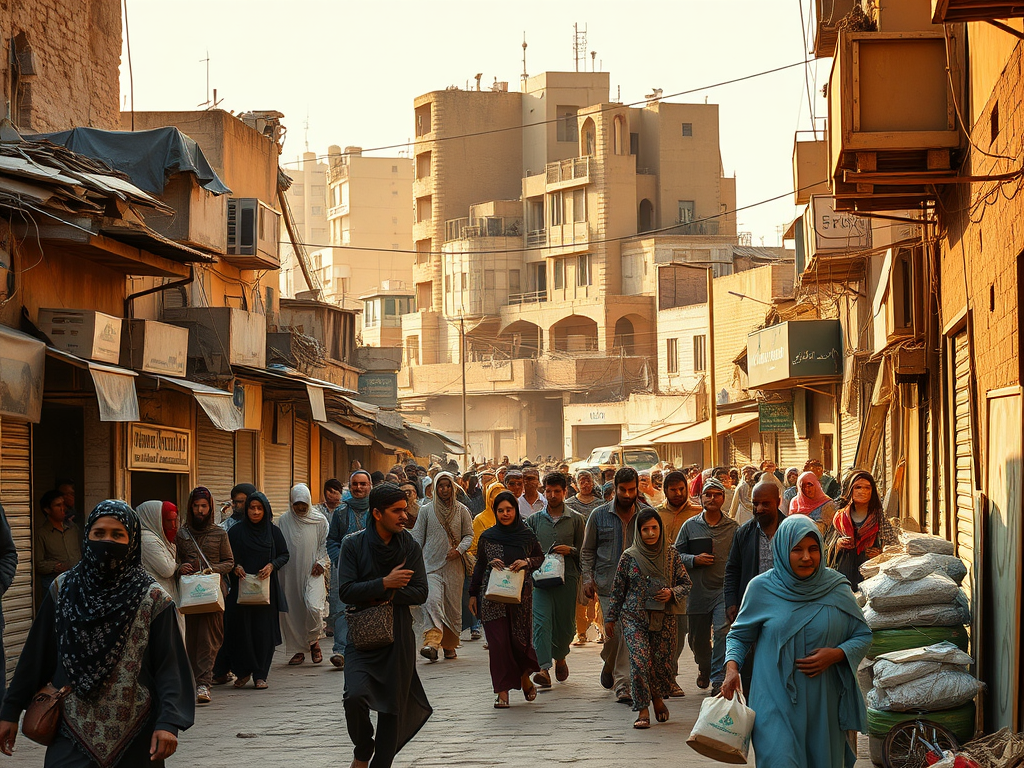
The recent decision by the Houthi movement to open roads and lift the siege on the Yemeni city of Taiz marks an important development in the protracted conflict that has gripped Yemen. For years, Taiz has been a focal point of intense fighting, resulting in a devastating humanitarian crisis. The Houthis’ blockade of Taiz has posed severe humanitarian challenges, with civilians bearing the brunt of the siege.
Humanitarian Impact of the Siege on Taiz
The siege of Taiz has had catastrophic consequences for its residents, exacerbating an already dire humanitarian situation. The blockade has restricted access to essential supplies, including food, medicine, and fuel, leading to widespread suffering. Women, cancer patients, and individuals with kidney failure have been particularly hard hit. Without access to proper medical care, many have died prematurely.
According to the International Committee of the Red Cross (ICRC), the blockade has severely limited the availability of life-saving treatments and medical supplies. “The situation in Taiz is dire. Patients, including those with chronic illnesses such as cancer and kidney failure, are unable to access the care they need,” said Robert Mardini, Director-General of the ICRC. The ICRC estimates that over 320,000 people in Taiz have been affected by the siege, with many suffering from malnutrition and preventable diseases due to lack of medical supplies.
Legal and Human Rights Dimensions
From a legal perspective, the siege on Taiz can be seen as a violation of international humanitarian law, which prohibits the use of starvation as a method of warfare and mandates the protection of civilians during conflicts. The United Nations Office for the Coordination of Humanitarian Affairs (OCHA) has repeatedly called for the lifting of the siege, emphasizing that the restrictions on the movement of goods and people violate fundamental human rights.
Human Rights Watch has documented numerous cases of civilians being deliberately targeted and civilian infrastructure being destroyed. “The Houthi siege on Taiz has amounted to collective punishment of the civilian population. This is a clear violation of international humanitarian law,” said Belkis Wille, Senior Crisis and Conflict Researcher at Human Rights Watch.
Political Context and Motives
The timing of the Houthis’ decision to lift the siege raises questions about their motives. The legitimate Yemeni government, based in Aden, recently ceased dealing with commercial banks in Sana’a, aiming to cut off financial resources to the Houthi-controlled areas. This move, endorsed by the Central Bank of Yemen in Aden, has placed significant economic pressure on the Houthis, who have used the siege of Taiz as a bargaining chip in negotiations.
International analysts suggest that the Houthis’ decision is a strategic response to the economic isolation imposed by the legitimate government. “The Houthis’ decision to open roads in Taiz can be seen as a tactical move to mitigate the economic stranglehold imposed by the Yemeni government,” notes Peter Salisbury, an analyst at the International Crisis Group. By lifting the siege, the Houthis might be attempting to ease some of this pressure and gain favor with international organizations and humanitarian agencies.
However, there is widespread skepticism about the Houthis’ intentions. Given their history of breaking promises and using humanitarian issues as leverage in negotiations, many view this move with suspicion. The legitimate government has expressed concerns that the Houthis might use the opening of roads as a temporary measure to gain political and economic concessions without committing to a lasting resolution.
Challenges Ahead
Despite the opening of roads, significant challenges remain. One of the most pressing issues is the presence of landmines, which pose a grave danger to civilians. The United Nations Mine Action Service (UNMAS) has reported that Yemen is one of the most mine-contaminated countries in the world, with thousands of mines still planted around Taiz. “Clearing these mines is a daunting task that requires significant resources and time,” said Agnès Marcaillou, Director of UNMAS.
Moreover, the deep-seated mistrust between the Houthis and the legitimate government complicates the prospects for sustainable peace. The lack of clarity about the Houthis’ real goals further fuels suspicion. “The Houthis’ track record of reneging on agreements and using humanitarian issues as bargaining tools makes it difficult to trust their intentions,” says Farea Al-Muslimi, a Yemeni analyst and co-founder of the Sanaa Center for Strategic Studies.
Humanitarian Situation Post-Siege
While the opening of roads may provide some immediate relief, the humanitarian situation in Taiz remains precarious. According to the World Food Programme (WFP), over 5 million people in Yemen are on the brink of famine, and Taiz is one of the most affected areas. “The siege has left a legacy of hunger and disease that will take years to heal,” said David Beasley, Executive Director of the WFP.
The International Rescue Committee (IRC) reports that in 2023 alone, approximately 1,000 children in Taiz suffered from severe acute malnutrition. “Even with the roads open, the challenge is to ensure that aid can flow freely and reach those in desperate need,” said Tamuna Sabadze, Yemen Country Director for the IRC.
Political Analysis
Political analysts agree that the Houthis’ move is likely a calculated response to the economic measures taken by the legitimate government. “The Houthis are trying to present themselves as more amenable to negotiations, possibly to gain a better position in any future talks,” said Adam Baron, an expert at the European Council on Foreign Relations. However, the genuine commitment of the Houthis to peace and the welfare of Taiz’s civilians remains in question.
Conclusion
The Houthis’ decision to lift the siege on Taiz is a complex and multifaceted issue. While it offers a glimmer of hope for the suffering civilians, it also raises numerous questions about the Houthis’ motives and the long-term implications for peace in Yemen. The international community must remain vigilant and ensure that this move translates into real and sustained improvements for the people of Taiz. Addressing the humanitarian crisis requires not only opening roads but also ensuring the safe and unimpeded delivery of aid, removing landmines, and building trust between the conflicting parties. Only then can Yemen begin to move towards a lasting resolution to its devastating conflict.
The situation in Taiz will continue to require close monitoring and robust international support to ensure that the humanitarian needs of the population are met and that any steps towards peace are genuine and sustainable. As the people of Taiz cautiously welcome this change, the world watches closely, hoping for a brighter future for a city and a country long battered by war.
Latifa Jamel
